

Sunset on Mars
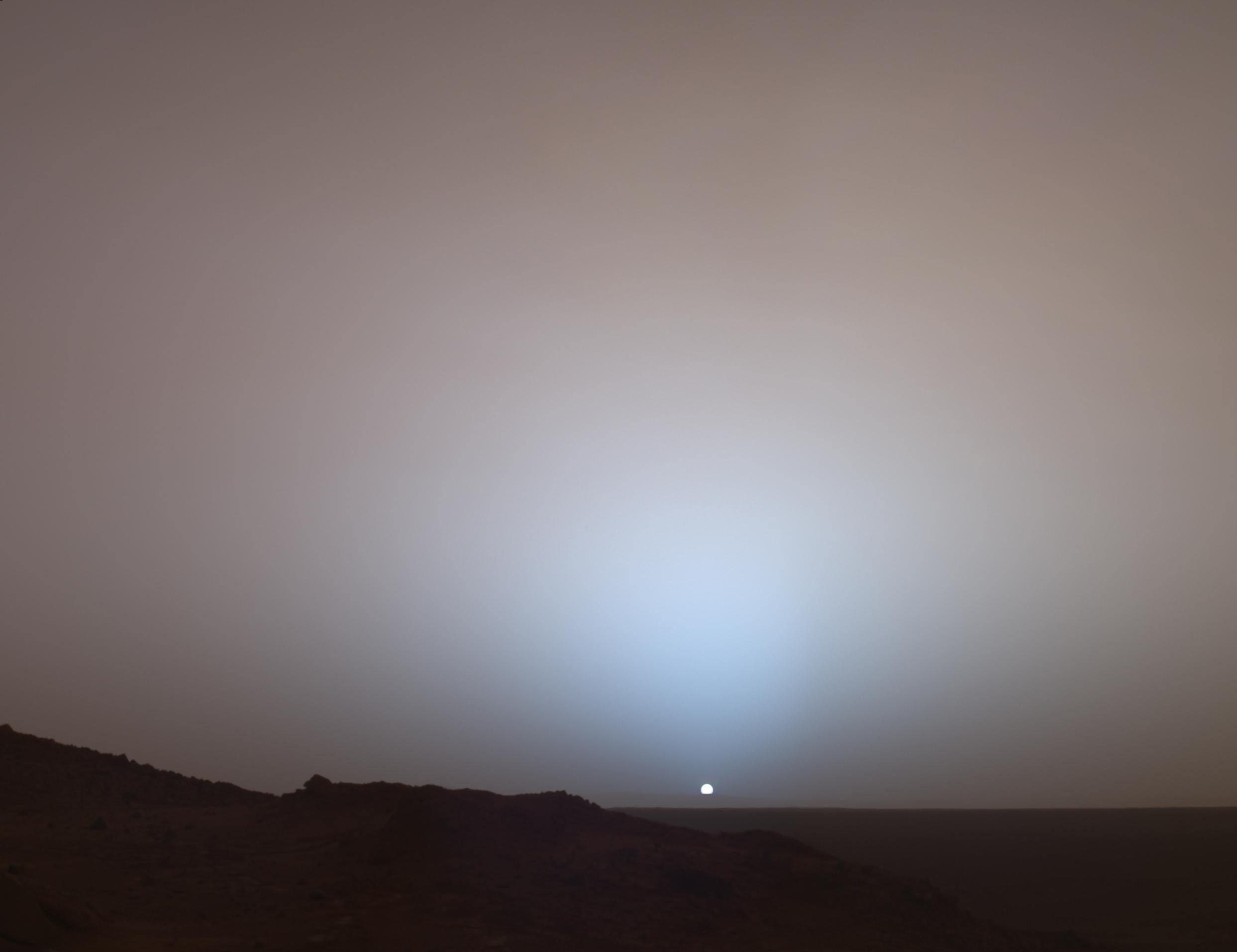
On May 19, 2005, NASA’s Mars Exploration Rover Spirit captured a remarkable sunset as the Sun dipped below the rim of Gusev Crater on Mars.
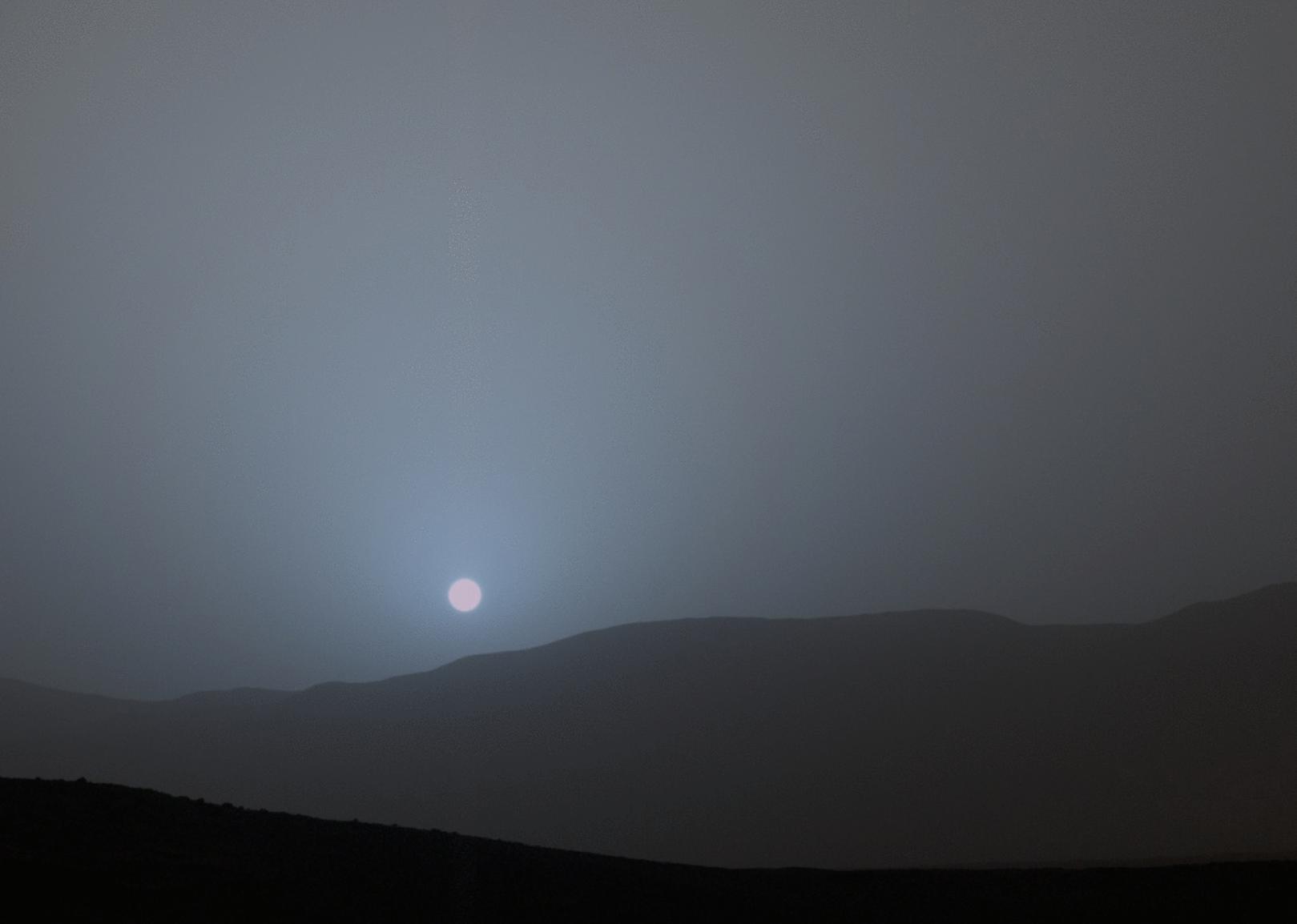
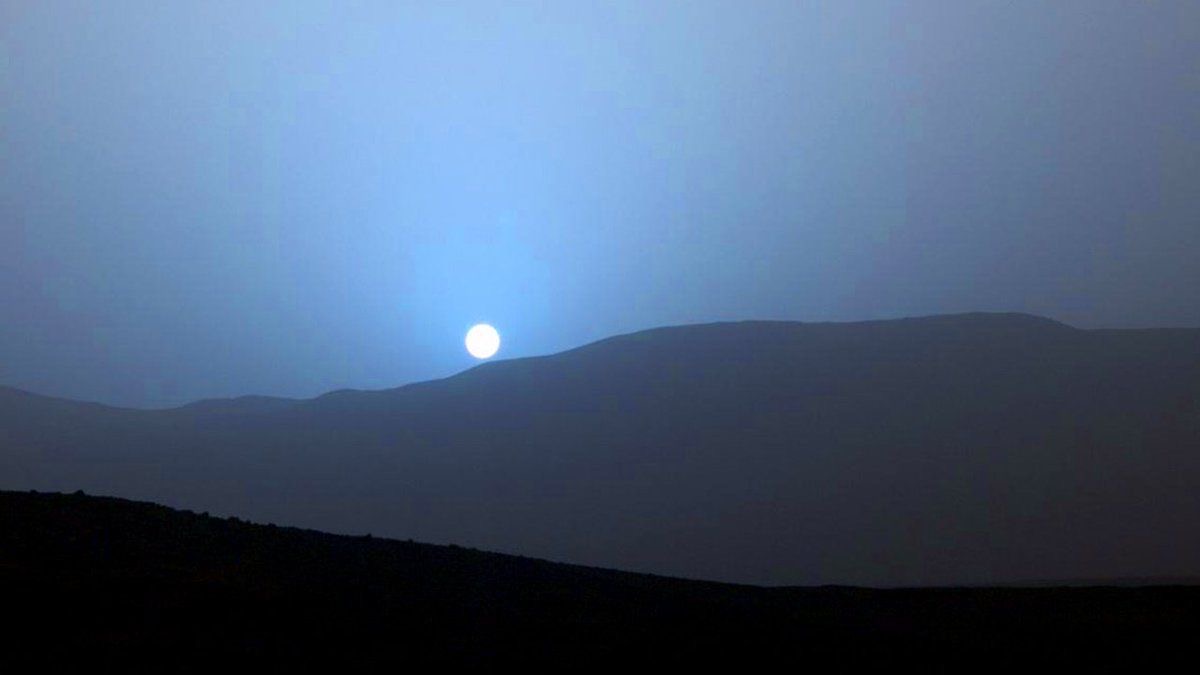
Mars is often imagined as a world of endless red deserts and rust-colored horizons. Yet one of its most remarkable natural phenomena appears at the end of the day, when the Sun sinks below the Martian landscape and the sky surrounding it turns blue. Throughout the Martian day, airborne dust scatters sunlight in a way that gives the sky its characteristic butterscotch or reddish appearance. As the Sun approaches the horizon, however, the same dust begins to scatter light differently. Blue wavelengths are directed forward through the atmosphere toward the observer, creating a cool blue glow surrounding the Sun while the rest of the sky remains warm-toned.
Over the past several decades, NASA has documented this phenomenon through multiple Mars missions, including Viking, Spirit, Opportunity, Curiosity, InSight, and Perseverance. Each mission has captured sunsets under different atmospheric conditions, allowing scientists to study seasonal dust activity, cloud formation, and the structure of the Martian atmosphere.
Mars is often imagined as a world of endless red deserts and rust-colored horizons. Yet one of its most remarkable natural phenomena appears at the end of the day, when the Sun sinks below the Martian landscape and the sky surrounding it turns blue. Throughout the Martian day, airborne dust scatters sunlight in a way that gives the sky its characteristic butterscotch or reddish appearance. As the Sun approaches the horizon, however, the same dust begins to scatter light differently. Blue wavelengths are directed forward through the atmosphere toward the observer, creating a cool blue glow surrounding the Sun while the rest of the sky remains warm-toned.
Over the past several decades, NASA has documented this phenomenon through multiple Mars missions, including Viking, Spirit, Opportunity, Curiosity, InSight, and Perseverance. Each mission has captured sunsets under different atmospheric conditions, allowing scientists to study seasonal dust activity, cloud formation, and the structure of the Martian atmosphere.
1/2
One particularly striking image was captured by the Perseverance rover in Jezero Crater, revealing the delicate blue coloration that has become one of the defining visual characteristics of Martian twilight. Earlier missions, such as Spirit and Opportunity, also recorded extended twilight conditions, demonstrating how fine dust can keep sunlight scattered long after the Sun has disappeared below the horizon.