

WIND SWEPT TREE
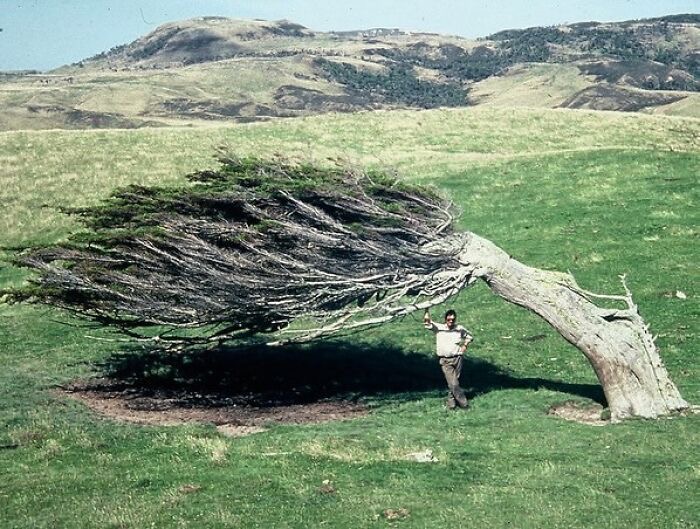
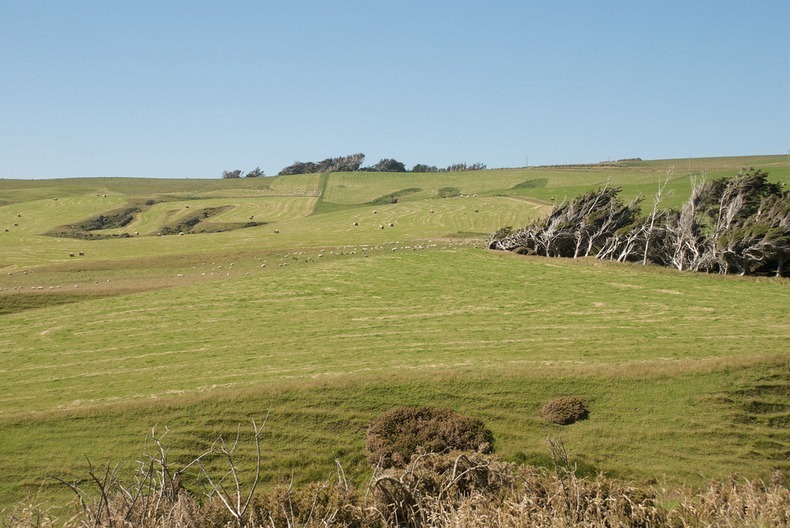
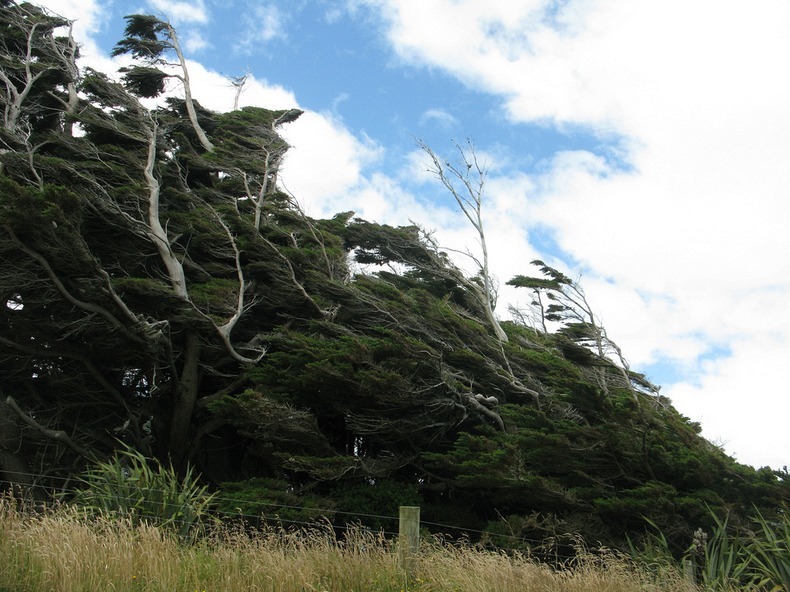
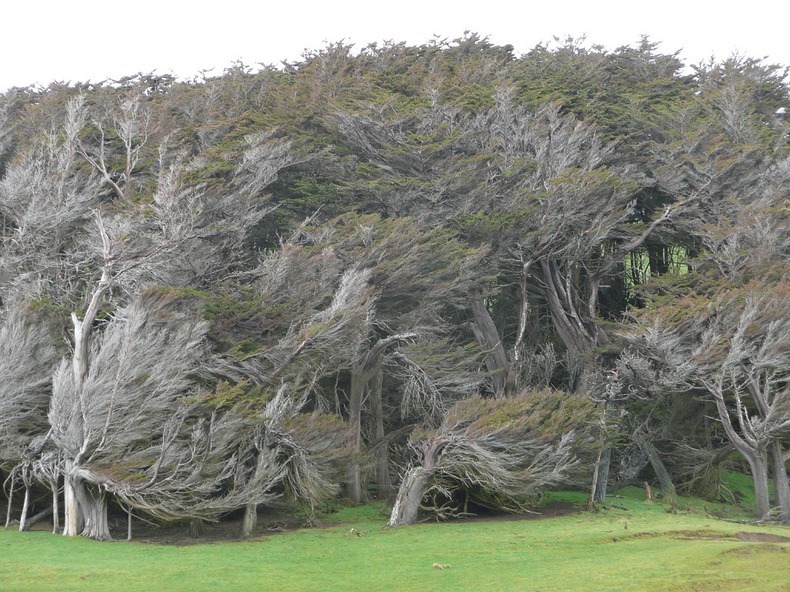
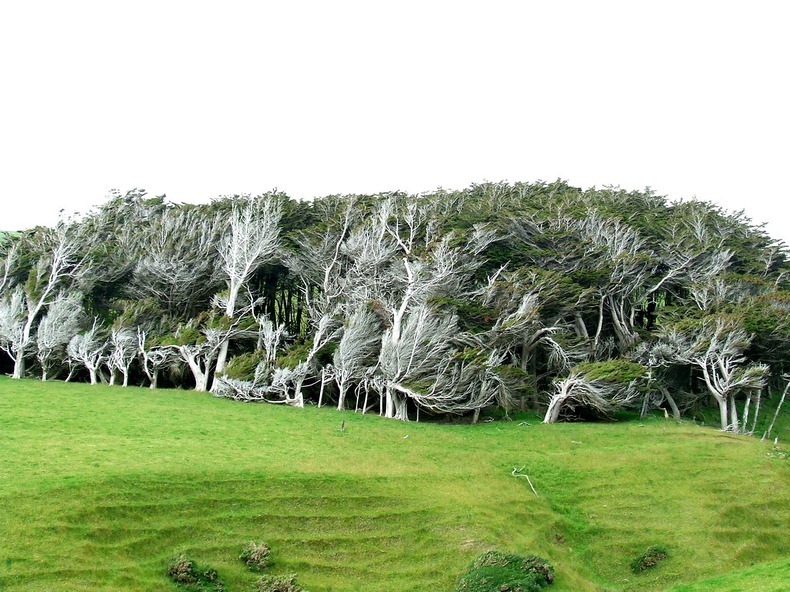
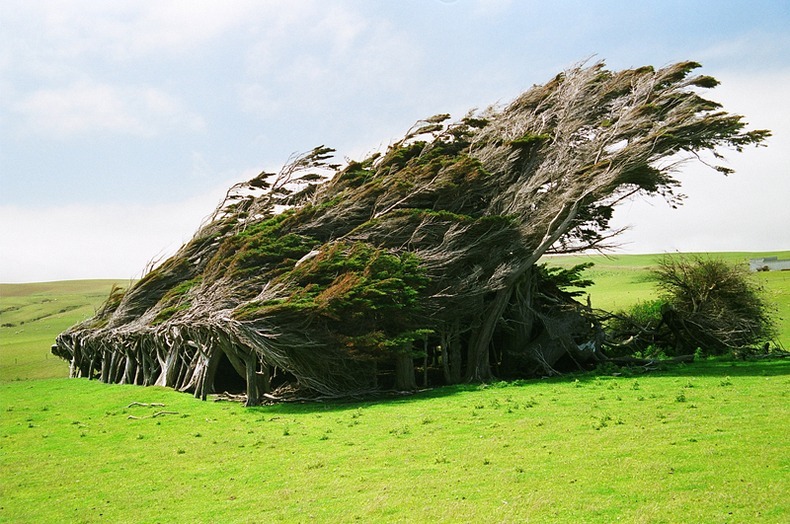
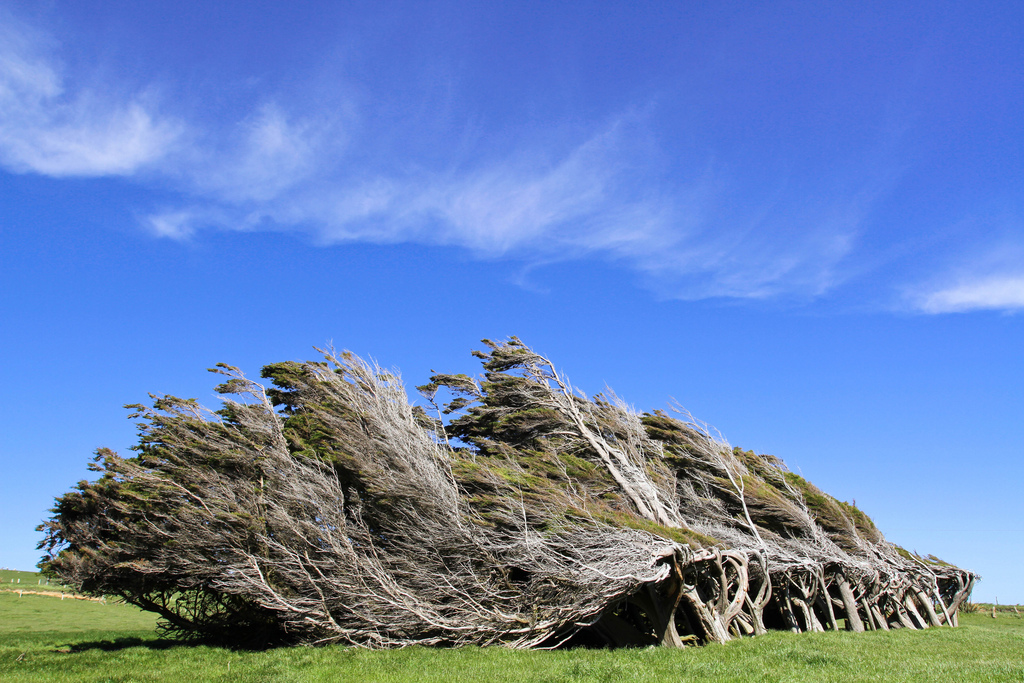
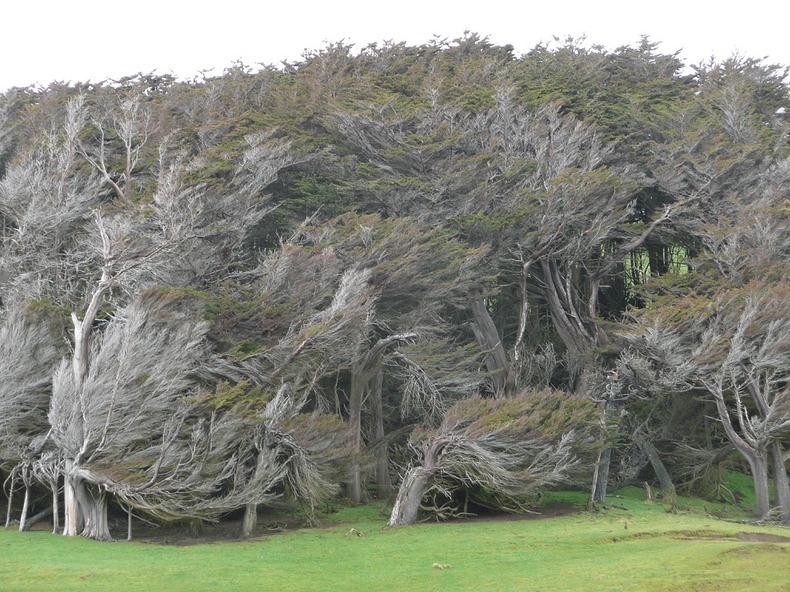
At the southern edge of New Zealand’s South Island lies Slope Point, one of the country’s most exposed coastal landscapes. Facing the vast Southern Ocean, this remote location is renowned for its extraordinary wind-swept trees—trees whose branches and crowns appear to grow almost horizontally, permanently shaped by decades of relentless Antarctic winds.
A Landscape Shaped by Wind
Slope Point sits directly in the path of powerful southwesterly winds that travel uninterrupted across thousands of kilometers of open ocean from Antarctica. With little to block these air currents, the landscape experiences constant exposure to strong, salt-laden winds. Over time, this persistent force influences not only the terrain but also the way vegetation grows.
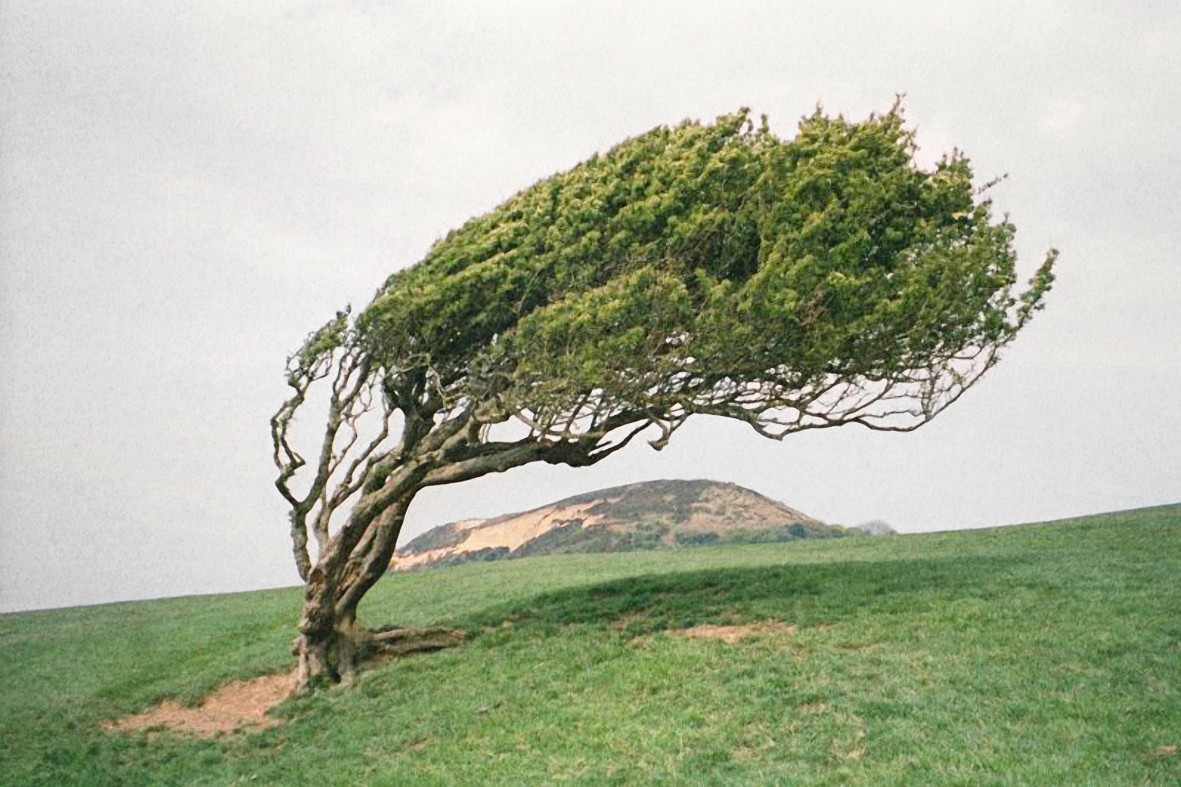
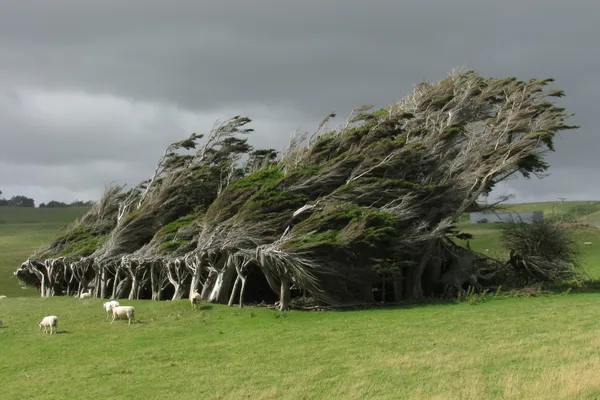
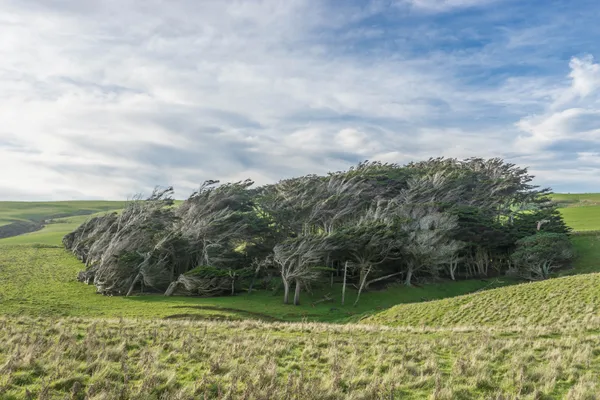
Rather than growing upward, many trees develop asymmetrical forms. Their trunks remain rooted vertically, but new branches continually grow in the direction of the prevailing wind, creating dramatic silhouettes that seem frozen in motion. This natural phenomenon is an example of how climate and geography can become visible in the form of living organisms.
A Landscape Shaped by Wind
Slope Point sits directly in the path of powerful southwesterly winds that travel uninterrupted across thousands of kilometers of open ocean from Antarctica. With little to block these air currents, the landscape experiences constant exposure to strong, salt-laden winds. Over time, this persistent force influences not only the terrain but also the way vegetation grows.
Rather than growing upward, many trees develop asymmetrical forms. Their trunks remain rooted vertically, but new branches continually grow in the direction of the prevailing wind, creating dramatic silhouettes that seem frozen in motion. This natural phenomenon is an example of how climate and geography can become visible in the form of living organisms.
1/10
Adaptation Rather Than Resistance
The trees at Slope Point illustrate a fundamental principle of survival in nature: adaptation. Instead of resisting the environment, they gradually adjust to it. Their unusual forms are not signs of weakness but evidence of resilience—an ongoing negotiation between biological growth and environmental pressure.
This relationship between natural forces and organic form has long inspired photographers, designers, architects, and artists. The trees demonstrate how external conditions can become embedded within material itself, creating forms that could never be intentionally designed.
Nature as a Record of Time
Unlike dramatic events that happen instantly, the trees of Slope Point are shaped through slow accumulation. Every season of wind leaves an almost imperceptible trace until, over decades, the landscape reveals a visible record of time.
In this sense, the trees function as living archives. Their forms document years of weather, climate, and environmental change, making the invisible force of wind permanently legible.
The trees at Slope Point illustrate a fundamental principle of survival in nature: adaptation. Instead of resisting the environment, they gradually adjust to it. Their unusual forms are not signs of weakness but evidence of resilience—an ongoing negotiation between biological growth and environmental pressure.
This relationship between natural forces and organic form has long inspired photographers, designers, architects, and artists. The trees demonstrate how external conditions can become embedded within material itself, creating forms that could never be intentionally designed.
Nature as a Record of Time
Unlike dramatic events that happen instantly, the trees of Slope Point are shaped through slow accumulation. Every season of wind leaves an almost imperceptible trace until, over decades, the landscape reveals a visible record of time.
In this sense, the trees function as living archives. Their forms document years of weather, climate, and environmental change, making the invisible force of wind permanently legible.